Turkey Harran Moon Temple
Our Turkey tours consistently stand a step above the rest in quality and depth, and here’s why:
Years of expertise in tourism have shaped our approach. Every itinerary is meticulously crafted by seasoned professionals and brought to life by our carefully selected, licensed Turkish local guides — individuals hired not just for their credentials, but for their passion and ability to connect guests with Anatolia’s soul.
Turkey Cultural tours with us aren’t mere sightseeing. They’re transformative journeys. You’ll stand where history unfolded, hear firsthand accounts of the stories behind ancient stones, and breathe in the atmosphere of civilizations past. These experiences don’t just broaden your horizons — they reshape how you see the world long after you return home.
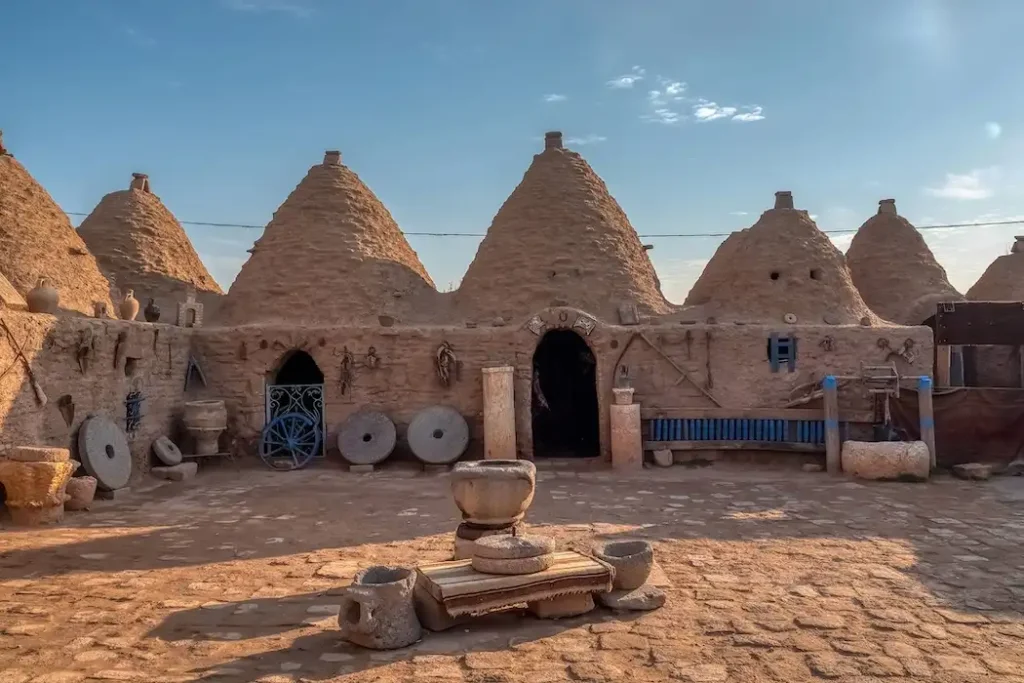
In the sun-drenched plains of southeastern Turkey ( Türkiye ), near the modern border with Syria, lies the ancient mound of Harran. Encircled by the stark reality of barbed wire, this unassuming hill is a vibrant archaeological site, a palimpsest of civilizations stretching back nearly 9000 years. Within its layers of earth and time, whispers of forgotten faiths echo, most notably the compelling story of a powerful Moon cult that held sway over these lands for centuries, potentially as far back as 3500 years ago.
Excavations at Harran Höyük have unearthed a remarkable timeline of human habitation, with the earliest traces dating to the Neolithic period. However, it is the Bronze Age and subsequent periods that reveal the profound influence of Mesopotamia. Assyrian seals from around 1950 BCE serve as tangible links to this powerful northern neighbor, hinting at early trade or political interactions. More significantly, the discovery of cuneiform scripts within the mound speaks of a dedicated temple to the Moon god, Sin (Suen in Sumerian). This sacred structure, known as E.HUL.HUL – the “House of Rejoicing” – stood as a central pillar of religious life in Harran.
Sin was no minor deity in the Mesopotamian pantheon. Revered for his wisdom, his role in charting the passage of time, and his association with fertility, he held a prominent position. Harran, alongside the southern city of Ur, emerged as one of his principal cult centers, drawing devotees and fostering a unique religious identity in the region. The E.HUL.HUL temple was not merely a place of worship; it was a hub of prophecy, where priests and priestesses interpreted celestial signs and delivered oracles believed to be divine pronouncements. This prophetic role imbued the temple and the Moon cult with significant social and political influence.
The reach and importance of Harran’s Moon cult are further underscored by historical records of international treaties. In the 14th century BCE, a pivotal peace treaty between the Hittite king Suppiluliuma I and the Mitanni king Mattivaza was solemnized in the presence of both the Moon god (Sin) and the Sun god (Shamash). This act highlights the regional stature of these deities and the respect accorded to their primary cult centers, placing Harran firmly within the geopolitical landscape of the Late Bronze Age.
The temple’s enduring significance is evident in its later restoration by the Neo-Assyrian king Shalmaneser III in the 9th century BCE. Such royal patronage underscores Harran’s continued strategic and religious importance within the vast Assyrian Empire. The act of rebuilding and honoring local deities was often a calculated move to ensure stability and garner favor within conquered territories.
Perhaps one of the most intriguing connections is to Nabonidus, the last king of Babylon in the 6th century BCE. His mother, Adad-guppi, was a fervent devotee of the Moon god Sin, and her influence on her son’s religious inclinations is well-documented in contemporary inscriptions. While the term “nun” might not precisely capture her role, her deep and influential association with the Sin temple in Harran is undeniable. Nabonidus himself displayed a marked devotion to Sin, sometimes prioritizing his worship over other traditional Babylonian deities, a move that ultimately contributed to his political downfall. This Babylonian connection further solidifies Harran’s long-standing identity as a key center for Moon worship.
Even the Roman era bears witness to Harran’s enduring religious aura. The historical accounts suggesting that Emperor Caracalla was assassinated in 217 CE en route to the Moon temple, while not definitively proven as the sole motive, speak volumes about the city’s continued religious significance well into the early centuries of the Common Era. Caracalla’s known interest in Eastern religions makes such a pilgrimage plausible, and his untimely death near Harran adds a layer of dramatic intrigue to the site’s history.
The mention of the crescent moon’s connection to Islam is a nuanced point. While the crescent moon was indeed a symbol in various pre-Islamic cultures of Central Asia and Anatolia, potentially including associations with Moon deities, the direct and singular lineage from the Harranian Moon cult to its adoption as the primary symbol of Islam is a subject of scholarly debate. While indirect cultural influences cannot be entirely dismissed, the prevailing historical understanding suggests that the crescent’s association with Islam solidified later, possibly linked to Ottoman-era symbolism and its prevalence in the region.
In conclusion, the archaeological evidence and historical texts paint a compelling picture of Harran as a pivotal center for the worship of the Moon god Sin for potentially over three millennia. From its early mentions in cuneiform scripts to its significance in international treaties and even its resonance in Roman times, Harran stands as a powerful testament to the enduring influence of this ancient cult. The echoes of the E.HUL.HUL temple still resonate within the dusty mound, offering a unique window into the religious landscape of the ancient Near East and the deep-rooted connection between humanity and the celestial dance of the Moon. Further research at this remarkable site promises to unveil even more secrets about this fascinating chapter in human history and the enduring legacy of Harran’s Moon god.